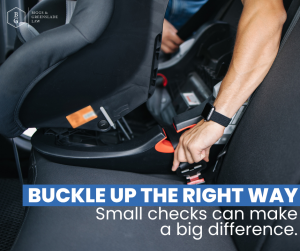
Child Passenger Safety Week is a timely reminder for parents, grandparents, and other caregivers to review how children are secured in the vehicle. Car seats and booster seats may be part of the daily routine, but small errors in selection, installation, or use can affect the protection a child receives.
Motor vehicle crashes remain a leading cause of serious childhood injuries, according to national traffic safety information. Using the appropriate car seat or booster seat correctly can greatly lower the risk of injury in a collision. A brief review of child passenger safety practices can help protect the young passengers who travel with you every day.
Match the Car Seat to Your Child’s Current Needs
Choosing the right restraint begins with a child’s current height and weight. Children require different types of protection as they grow, progressing from rear-facing seats to forward-facing seats, booster seats, and eventually a vehicle’s standard seat belt.
Advancing to the next stage before a child is ready may limit the protection available in a crash. A properly fitted seat is designed to support and protect a child’s head, neck, and body during an accident.
Because children grow quickly, caregivers should revisit the manufacturer’s instructions on a regular basis. A car seat arrangement that was appropriate in the past may not be the safest choice now.
Secure Installation Is Essential
A high-quality car seat can only work as intended when it is installed correctly. Installation mistakes are common, including among caregivers who have used child safety seats for years.
Once installed, the seat should be firmly secured in the vehicle, with minimal movement at its base. If it slides, rocks significantly, or sits unevenly, it may not offer the level of protection it was made to provide.
Installation directions should always be reviewed carefully, and families should ask for help when they are unsure about any part of the process. A few corrections to the setup can make an important difference in a child’s overall safety.
Check the Harness Before Every Trip
After the car seat is properly installed, the harness is what keeps the child positioned securely. The straps should lie flat against the child’s body, without twists, and should be snug enough that there is no unnecessary slack.
The chest clip should generally sit at armpit level. Keeping it in this position helps maintain the harness alignment needed to function properly during a sudden stop or collision.
Twisted straps, loose harnesses, and misplaced chest clips can reduce the effectiveness of the restraint system. Taking a few moments to check the harness before leaving can help improve protection on every ride.
Wait Until the Seat Belt Fits Without a Booster
Booster seat safety can be easy to overlook as children become more independent. However, a child is not necessarily ready for an adult seat belt simply because they are older. Vehicle seat belts are designed to fit adult bodies.
A booster seat raises and positions a child so the lap and shoulder belt rest where they should. Without that positioning, a seat belt may not offer sufficient protection in a crash.
Many children need a booster seat until they are approximately 4 feet 9 inches tall. Before removing the booster, caregivers should confirm that the lap belt rests across the upper thighs and that the shoulder belt crosses the middle of the chest comfortably.
Consider a Professional Car Seat Check
Child Passenger Safety Week is also a useful opportunity to arrange a professional car seat inspection. Even when an installation appears correct, an additional review from a trained professional can provide helpful reassurance.
Certified Child Passenger Safety Technicians can identify frequent installation concerns, answer caregiver questions, and help confirm that a seat is appropriate and being used correctly. These checks are often offered at no cost and can give families greater confidence in their child’s protection.
Periodic inspections can be particularly valuable when a child grows or moves from one type of restraint system to another. Each transition is an opportunity to make sure the new setup fits both the child and the vehicle properly.
Make Child Passenger Safety Part of the Routine
Child passenger safety is an ongoing responsibility rather than a task completed once. As children grow and their needs change, their car seat or booster seat setup should be reviewed to ensure it continues to provide appropriate protection.
Everyday habits, including checking the harness, confirming that the seat remains secure, and evaluating booster seat readiness, can help reduce the risk of injury in an accident. Child Passenger Safety Week offers an important prompt to revisit these essential steps and make updates where necessary.
Keeping children safe on the road begins with awareness and careful attention to the details. If your family has questions about an accident, an injury claim, or legal rights after a motor vehicle collision, Biggs & Greenslade, P.C. can provide trusted guidance and support when it matters most.

